
Healthcare facilities increasingly adopt digital patient check-in systems to enhance efficiency, reduce administrative burdens, and improve patient experiences. These self-service kiosks and online platforms allow patients to update personal information, verify insurance, and complete forms quickly, minimizing wait times and reducing paperwork. By automating repetitive tasks, staff can focus more on patient care, which boosts morale and reduces costly human errors. The technology also supports greater accuracy in record-keeping, helping ensure compliance with healthcare regulations. The streamlined process reduces stress and creates a smoother journey from arrival to treatment for patients. Facilities benefit from faster throughput, improved data management, and the ability to allocate staff resources better. As healthcare demand grows and workforce shortages persist, efficient check-in solutions have become essential in meeting operational needs and patient expectations, making the care experience more seamless, accurate, and satisfying for everyone involved.
Introduction
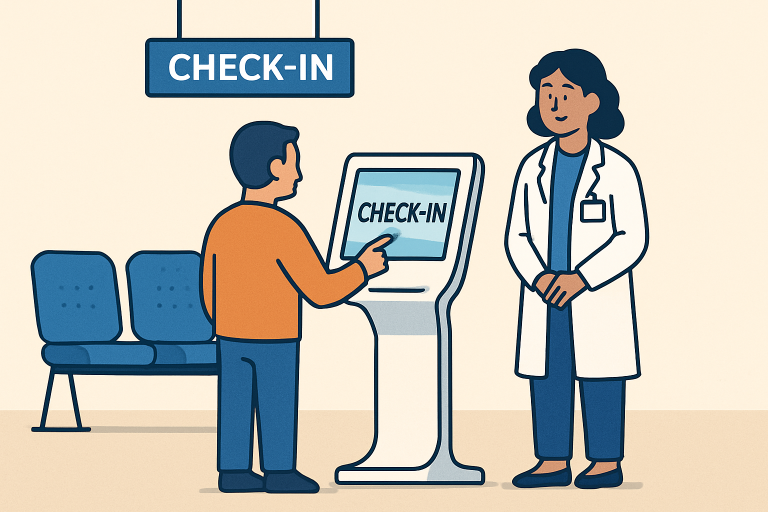
The healthcare industry faces mounting pressures from rising patient volumes and ongoing staffing shortages, making operational improvements more critical than ever. Technology-driven tools are emerging as key allies in bridging service gaps and enhancing overall care delivery. In an era where efficiency and patient satisfaction are paramount, healthcare providers are turning to modern solutions to streamline administrative tasks and improve patient journeys. One of the most significant advancements in recent years is the adoption of check-in kiosks for patients, which are transforming how patients engage with healthcare facilities from the moment they arrive. These digital solutions offer a seamless, self-service alternative to traditional paper-based and manual check-in processes, addressing common pain points such as long wait times and paperwork overload.
By digitizing the check-in experience, facilities can enhance data accuracy, expedite patient flow, and reduce staff administrative workload. As more healthcare organizations implement these innovations, patients and providers are discovering the tangible benefits they bring, including improved compliance, better information management, and a more welcoming atmosphere for all visitors. The integration of check-in kiosks for patients is just one example of how technology is making healthcare more accessible, personalized, and efficient.
The Evolution of Patient Check-In
For decades, patient check-in at clinics and hospitals relied on manual steps: forms were filled out by hand, identification and insurance cards were presented at the front desk, and staff would collect and enter this information. This approach created bottlenecks at busy reception areas and increased the risk of errors and miscommunication. It became clear that a more efficient and patient-friendly system was needed, sparking the shift to digital alternatives.
The rise of digital check-in solutions began with simple electronic forms and has rapidly evolved to include self-service kiosks, tablet-based registration, and mobile check-in through dedicated apps or online portals. These platforms empower patients to update their records, review consent forms, and verify insurance benefits with minimal assistance, often before arriving at the facility. The result is a more streamlined process that benefits patients and healthcare providers alike.
Benefits of Digital Check-In Systems
- Reduced Wait Times: Digital systems let patients handle paperwork and updates in advance, slashing the time spent in waiting rooms and keeping schedules running on time.
- Enhanced Data Accuracy: Patients directly entering their information significantly reduces transcription mistakes. Digital checks for completeness and legibility further minimize clerical errors common with paper forms.
- Improved Patient Satisfaction: Automated, user-friendly interfaces create smoother, more predictable experiences, reducing frustration and anxiety associated with lengthy check-in queues.
- Operational Efficiency: When administrative staff are liberated from repetitive data entry and paperwork, they can focus on higher-value interactions and more complex patient needs.
Challenges in Implementing Check-In Technology
The path to modernizing check-in procedures is not without its obstacles. Implementing new technology presents notable challenges:
- Cost Implications: Rolling out digital check-in options—especially check-in kiosks—can be costly. Smaller practices may struggle to justify the upfront investment, even with long-term efficiency gains.
- Staff Training: Successful adoption depends on well-trained staff who can troubleshoot issues and help patients use new tools, fostering a smooth integration into daily routines.
- Patient Adaptation: While many patients embrace digital options, older adults or those with limited digital literacy may feel overwhelmed. A compassionate, flexible approach to onboarding is essential to ensure no one feels left behind.
Real-World Examples of Successful Implementation
Many healthcare organizations have demonstrated the positive impact of digital check-in technologies.
- NYU Langone Health: This renowned facility introduced Amazon’s biometric palm scanning technology to provide secure, touchless patient check-in. The move has streamlined identity verification and enhanced privacy and convenience.
- Maidstone and Tunbridge Wells NHS Trust: By implementing TeleTracking’s cloud-based patient flow technology, this UK hospital system reduced emergency department wait times by over an hour per patient and achieved significant operational savings.
Future Trends in Patient Check-In Technology
Healthcare check-in technology is rapidly evolving, and several emerging trends are set to define its future:
- Biometric Authentication: Palm scans, facial recognition, and fingerprints streamline identification while bolstering security.
- Artificial Intelligence (AI): AI-driven systems promise to predict patient flow, optimize appointment scheduling, and personalize the check-in process for each visitor.
- Integration with Electronic Health Records (EHR): Seamless synchronization of check-in data with health records ensures clinicians have real-time, accurate information for better care coordination.
Technology like this is reshaping what patients expect from their visits, offering greater convenience, efficiency, and peace of mind. As healthcare facilities continue to invest in digital innovations, they position themselves to meet rising expectations and adapt to future advances with agility.
Ultimately, patient check-in technology—especially solutions such as check-in kiosks—represents a leap forward in making healthcare more responsive, efficient, and patient-centric. As the landscape evolves, these tools will be essential for delivering high-quality, modern care while keeping patient engagement at the heart of every interaction.